



Our Web Design Process:
When we talk about web design, what do we really mean? Is it about the looks of the site? Is it about its layout and functionality? Should it be colorful, splashy, and visually impressive? Or is there something more important than how a website looks?
Do looks matter?
Of course they do. But looks alone don’t pay the bills.
Think about an advertisement you see on television. Some ads are entertaining, beautifully produced, and even humorous. You enjoy watching them. But did the advertisement move you to action? Did you pick up the phone, visit the dealership, or go to the store to buy what they were selling?
Did that advertisement turn you into a customer?
It’s much the same on the web. The medium is different, but the objective is the same.
The design of your website should encourage visitors to take action. And that action is different for different organizations. If you’re a charity, you want people to donate their time or money. If you’re an ecommerce business, you want visitors to buy what you’re selling. If yours is an informational website, you may want to educate visitors, answer their questions, or reinforce their confidence in your organization.
News and entertainment websites are somewhat different. Their objective may be to encourage visitors to spend more time reading or watching content, generating advertising revenue or subscriptions.
But for most business websites, the objective is to encourage some measurable action. That action, rather than appearance alone, determines how effective the design really is.
Sometimes there is no easy answer. That’s when we test different approaches. Would a different headline work better? Would moving the contact button make a difference? Would a simpler layout generate more inquiries? A/B testing can help us discover what appeals to your target market instead of relying entirely on personal preferences.
Should a restaurant website use warm, inviting colors? Should a physician’s website use softer colors and a more reassuring presentation? There are no universal answers. What matters is understanding the audience and the purpose of the website.
Non-Profits:
What about a Masjid, a Church, or a Temple? What kind of website would encourage people to participate, volunteer, or donate more generously?
Quite often there is no easy answer.
Instead of imposing a design on you, we work with you to develop one that is right for your organization. We want the website to reflect your personality, your values, and the expectations of the people you serve.
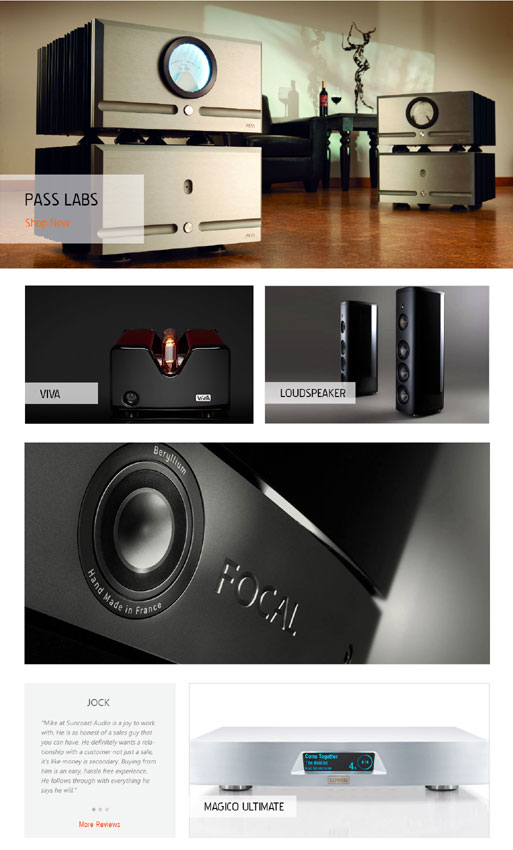
For example, if your competitive strength is low prices, we shouldn’t design a website that looks more appropriate for an exclusive Fifth Avenue boutique. Customers may assume your products are expensive and leave before discovering otherwise.
Good design communicates the right message before the visitor has read a single paragraph.
Target Market:
Website design should be in line with your target audience.
If your market is teenagers, the design, navigation, and presentation should reflect their expectations. If your market is seniors, we should be mindful of readability, ease of navigation, and accessibility. Sometimes something as simple as a larger font, better contrast, or clearer instructions can make a substantial difference.
Different audiences respond to different styles, imagery, colors, and layouts. But we shouldn’t rely on stereotypes or assumptions. We should understand the people we’re trying to reach and, wherever practical, learn from how they actually use the website.
Good design should reflect both your organization’s personality and your customers’ needs.
Sales Pages/Squeeze Pages:
Some of our best sales-generating pages have also been among the ugliest.
They weren’t designed to win beauty contests. They were designed to generate a specific action, and they did.
This is especially true of landing pages, sometimes called squeeze pages, where the visitor is encouraged to take one particular action: sign up, request information, download something, or make a purchase.
A page with fewer distractions can sometimes outperform a beautifully designed page filled with impressive graphics and animations.
If it delivers the desired results, that’s beautiful enough for us.
Of course, the appearance still matters. The right colors, photographs, typography, and layout can establish confidence and help visitors understand what you’re offering. The challenge is to use those elements to support the objective rather than distract from it.
Blog Design:
Blogs are very personal in nature. They should reflect you.
If you have a reserved, straightforward personality, a minimalist design may be appropriate. If you enjoy discussion and interaction, your blog should make it easy for readers to comment, ask questions, and participate.
A blog about serious financial matters probably shouldn’t look like an entertainment magazine. And a travel blog shouldn’t feel like an accounting application.
There is no single design that works for every blog. The design should complement the author, the subject, and the audience.
Logo Design:
One of the most subjective areas of design is logo creation.
Everybody wants a great logo. But ask ten people to define a great logo, and you may get ten different answers.
What exactly makes a logo great? Is it the colors, the lettering, the symbol, or the impression it creates? Often the client has an image in mind that is difficult to translate into words.
Beauty is in the eye of the beholder, and that is particularly true of logos.
We have sometimes developed ten, twenty, or even twenty-five variations before arriving at a design the client was happy with. But we also consider whether the logo is recognizable, readable, appropriate for the business, and practical to use across websites, printed materials, and other media.
A good logo should do more than please its owner. It should help people recognize and remember the organization.
Give and Take between looks and functionality:
A website can be visually impressive and still perform poorly.
Elaborate animations, oversized images, and unnecessary visual effects may look attractive, but they can slow down a website and frustrate visitors.
We have to balance appearance with speed, functionality, accessibility, and search engine visibility. We also have to consider hosting resources, bandwidth, security, and the cost of maintaining the website.
Modern web technologies allow us to create attractive layouts, animations, and interactive features without sacrificing usability. But just because we can add a feature doesn’t mean we should.
After all, what good is a beautiful website if visitors leave before it finishes loading?
Responsive Design:
Not long ago, website designers had to decide whether to design primarily for conventional computer screens or invest in a responsive design that also worked on smartphones and tablets.
Today, that decision has largely disappeared. Responsive design is an essential part of modern website development.
Visitors may discover your website on a desktop computer, a tablet, or a mobile phone. The layout should adapt to the screen without making people struggle to read text, navigate menus, complete forms, or purchase products.
However, simply shrinking a desktop layout to fit a phone is not enough. Buttons must be easy to tap, images must display properly, navigation must remain intuitive, and pages must load efficiently on mobile connections.
Our job is to make it easy for customers to interact with you, regardless of the device they use.
Backend Design:
Our approach to designing a front-end user interface (UI) is quite different from designing the backend used by your administrators, data entry personnel, accountants, salespeople, and other employees.
On the customer-facing side, we focus on presentation, usability, confidence, and conversion.
On the backend, our focus is on speed, accuracy, economy, and functionality.
For example, when designing an interface for your data entry staff, we want to minimize the number of keystrokes and repetitive actions. Saving a few seconds on a task may not sound impressive, but when that task is performed hundreds or thousands of times, the savings can be substantial.
For your accountant, we want to make the necessary financial information readily available, preferably with the ability to export data into spreadsheets for further analysis.
For your salespeople, we may need quick access to customer information, order history, inventory availability, and pricing.
Application Programming Interfaces (APIs) can connect systems and automate the exchange of information. Product feeds can be imported from distributors and prepared for ecommerce websites or marketplaces without manually entering every product. Inventory, pricing, orders, and shipment information can move between systems with less duplication of effort.
Depending on the requirements, integrations may use APIs, XML, JSON, EDI, or other established data exchange methods.
The objective is the same: greater efficiency, fewer errors, and better use of your employees’ time.
Sometimes the most valuable part of a website is the part your customers never see.
We believe that good design starts with the end result in mind. A spectacular design is wasted effort if visitors don’t do what you want them to do, or if your employees struggle to manage the business behind it.
We can help you plan the details, from color schemes and calls to action to screen layouts, navigation, forms, social media integration, infographics, and the tools needed to manage your operations.
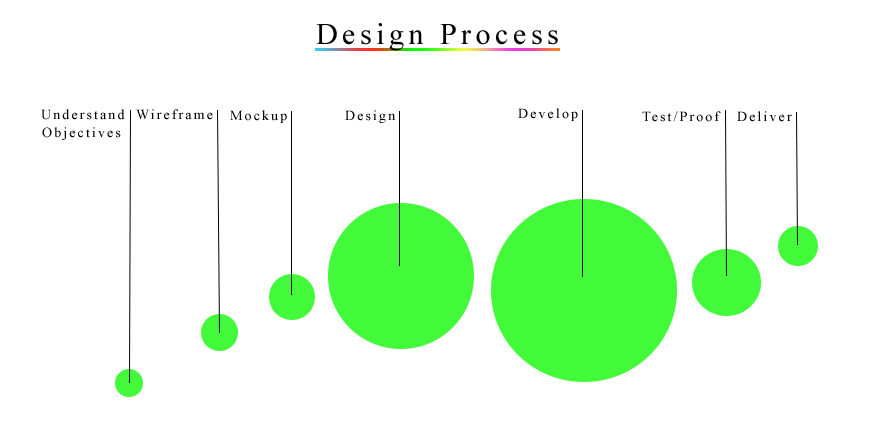
During the design process, our approach generally includes:
- Understanding your business: We learn about your objectives, customers, operations, and the problems you want the website to solve.
- Planning the structure: We develop the website’s organization, navigation, and key user journeys.
- Creating wireframes: We establish the layout and placement of important content and functions before concentrating on visual details.
- Developing the visual design: We create mockups or interactive prototypes that reflect your branding and work across different screen sizes.
- Implementing the design: We translate the approved design into responsive web pages and integrate the necessary functionality.
- Testing and refining: We review usability, mobile compatibility, accessibility, performance, and functionality before launch.
Not every project requires every step in exactly the same order. A small informational website is different from a complex ecommerce platform or a custom business application. We adapt the process to the requirements and budget of each project.
Design Challenges:
As designers, we are constantly faced with choices. Which tools, layouts, and creative elements will deliver the best results?
Should a landing page use a simple, straightforward layout or something more elaborate? Should we include infographics? Would a short video explain the product better than several paragraphs of text? Do we need an image slider, or would one strong photograph be more effective?
Should important information appear near the top of the page? How many navigation choices should we provide? Would a shorter form encourage more inquiries? Should a visitor be able to complete a purchase without creating an account?
These may seem like small decisions, but collectively they determine how easily people can use your website.
We also consider search engine visibility, accessibility, page loading speed, and how easily the website can be updated as your business grows.
And whenever possible, we prefer evidence over guesswork. Website analytics, customer feedback, and testing can tell us whether a design is accomplishing what it was intended to accomplish.
There is no shortage of attractive websites on the Internet. The real challenge is to create one that works for your business.
So how can we help you?
Whether you need a new website, want to improve an existing one, or are planning something more complex, we’d like to understand what you’re trying to accomplish.
We won’t begin by telling you what your website should look like. We’d rather begin by asking what you want it to achieve.
Fill out the contact form or pick up the phone and call us. Let’s talk.

Mockups

Design

Understanding Objectives

Wireframe

Development

Deliver

Testing
